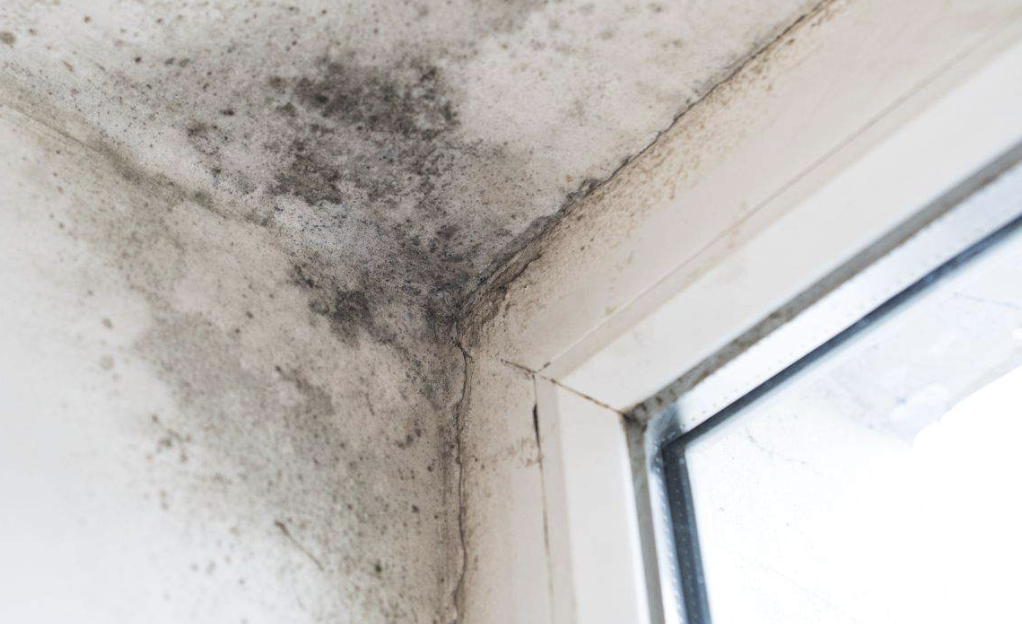
Damp and mould in a rented home are your landlord's responsibility in almost every case. If you reported it and your council or housing association failed to put it right, you may be able to claim compensation as well as the repairs themselves. Awards in comparable cases commonly fall between £1,500 and £6,000, depending on how many rooms were affected and how long it went on. Since 27 October 2025, social landlords have been under legally binding deadlines under Awaab's Law to investigate damp and mould within 10 working days and to begin the work that makes your home safe within 5 working days of that investigation concluding.
Is mould your landlord's responsibility?
Yes, in the overwhelming majority of cases.
Mould does not appear on its own. It grows because moisture is getting into the building, or because moisture created by ordinary living cannot get back out of it. Both are your landlord's problem to solve, not yours.
Penetrating damp. A leaking roof, cracked render, failed pointing, blocked or broken gutters, or a leaking pipe letting water in through the structure.
Rising damp. A failed or missing damp proof course, letting moisture travel up through the walls from the ground.
Condensation damp. Poor or absent ventilation, no working extractor fans, single glazing, cold bridging, thin insulation, or heating you cannot afford to run because the property loses warmth as fast as you put it in.
When your landlord blames your lifestyle
Councils and housing associations very often blame condensation on what they call tenant lifestyle: drying washing indoors, not opening the windows, not heating the property enough. That argument fails whenever the building itself cannot cope with ordinary household living.
Ask one question. Can a normal family live here, cooking, washing and breathing, without mould forming on the walls? If the bathroom and kitchen have no working extractor fan, if the windows do not open, if the walls are cold and barely insulated, the answer is no, and the cause is the building rather than you. An independent surveyor instructed on your damp and mould claim will say so in writing, which is usually where that argument ends.
The law on damp and mould
Several separate pieces of law sit behind a damp and mould case. You do not need to know them in detail, but it helps to know they exist when your landlord tells you nothing can be done. Our guide to landlord repair responsibilities covers the wider picture.
Law | What it requires |
|---|---|
Your landlord must keep the structure and exterior in repair, including roofs, walls, windows, gutters and pipes. This covers penetrating and rising damp. | |
Homes (Fitness for Human Habitation) Act 2018 | Your home must be free from serious hazards and fit to live in throughout the tenancy. Damp and mould are named hazards, so this covers condensation damp caused by the building. |
Awaab's Law | Social landlords must meet fixed legal deadlines to investigate and act on damp and mould. In force since 27 October 2025. |
Housing Health and Safety Rating System | Your council's environmental health team scores damp and mould growth as a hazard and can serve enforcement notices on your landlord. |
Environmental Protection Act 1990, section 82 | Where mould amounts to a statutory nuisance that is harmful to health, you can bring a prosecution against your landlord in the magistrates' court. |
How much compensation for damp and mould?
Compensation for damp and mould has two parts. The first is a share of the rent you paid while the mould went untreated, which reflects the loss of comfort and use of your home. The second is the cost of everything the mould destroyed.
How bad it was | Broad range from comparable cases |
|---|---|
Mould in one room, under 12 months | £750 to £2,000 |
Mould in a bedroom, one to two years | £1,500 to £4,000 |
Mould across two or more rooms, one to two years | £3,000 to £6,000 |
Widespread damp and mould, more than two years | £5,000 to £12,000 |
These are broad ranges drawn from how the courts have approached comparable cases. They are not a promise, and nobody can tell you what your own claim is worth until the evidence has been gathered. If the mould has also made someone in the home ill, that part of a claim is assessed separately on medical evidence and sits outside the figures above.
A worked example
Rent of £650 a month. Black mould in the main bedroom and the bathroom, reported and ignored for 20 months, assessed at 35% of the rent.
£650 at 35%, over 20 months, comes to £4,550. Add £1,100 for a ruined mattress, wardrobe and clothing, and £400 in extra heating, and the total is £6,050.
That is an illustration of the method, not a prediction. Our housing disrepair compensation guide explains how each part of an award is worked out.
Rough figures only. This is not a valuation of your claim.
No tool can tell you what your claim is worth. Every case is decided on its own facts and some claims do not succeed. What a claim is actually worth depends on the evidence you have, when you reported it and how your landlord responded, how much of your home was affected and for how long, the effect on your health, and any rent arrears, which can be set off against an award.
Where the percentages come from
These are shares of the rent paid over the affected period, not fixed sums or fixed court tariffs. The calculator uses illustrative percentage ranges to show how compensation may vary depending on the extent of the disrepair. Every claim is assessed on its own facts. This calculator caps its illustration at 100% of the rent for the affected period; this is not a legal maximum.
The full method, and what is not included
How damages are assessed. Where a tenant stays in the property, the loss is loss of comfort and convenience. It can be assessed as a notional reduction in rent, or as a global award cross checked against the rent for the period. A further 10% is added to general damages under Simmons v Castle, and this tool applies it.
Courts vary the percentage over time. In practice a judge often applies different percentages to different periods as a problem gets worse or is partly fixed. This tool applies one band across the whole period, so it is a simplification.
Ruined belongings and extra costs are special damages. They are claimed separately, itemised, and should be supported with receipts, photographs or other evidence where available.
Not included: any personal injury, such as a breathing condition caused or made worse by damp, which is valued separately and has a shorter three year time limit; any rent arrears, which can be set off against an award; and the cost of the repairs themselves, which a court can also order your landlord to carry out.
The Housing Ombudsman is a different route. It can consider complaints about social landlords and may order compensation or other remedies. Whether it can consider a complaint can depend on whether the same issues are, or have been, part of legal proceedings. We can explain which route may be available to you.
This is general information about how the courts approach these claims. It is not legal advice, it is not a valuation, and using this tool does not make us your solicitors.
Open the full calculator on its own page

Claiming for the effect on your health
Mould releases spores into the air you breathe at home. Prolonged exposure is associated with:
Asthma, both newly triggered and made worse
Chest infections and coughs that will not clear
Wheezing, breathlessness and throat irritation
Allergic reactions, rhinitis and sinus problems
Skin irritation and rashes
Sore or streaming eyes
Children, older tenants and anyone already living with a respiratory condition tend to be affected first and worst.
Get it recorded. To claim for the effect on your health, it has to appear in your medical records. See your GP, describe the conditions at home rather than only the symptoms, and ask for the connection to be noted. An appointment recorded while you were still living with the mould carries far more weight than an account given long afterwards. Any injury element is then valued separately by a medical expert on the evidence.
Still looking at the same patch of mould?
Tell us what you reported and when, and we will tell you where you stand. It takes about a minute and costs nothing.
Check if you can claimWhat to do about mould in your rented home
Report it in writing today. Email your landlord or use their repairs portal. Name every affected room. Attach photographs. Ask for a written response and an inspection date, and keep the sent copy.
Photograph it properly. Daylight, a wide shot showing the whole room, then close ups. Use a camera app that stamps the date. Photograph the damaged belongings as well as the walls.
Keep a diary. Every call, every visit, every missed appointment, every promise. Dates and names.
See your GP if anyone in the home is coughing, wheezing or unwell, and ask for it to go in your records.
Do not simply paint over it. Mould resistant paint hides your evidence and does nothing about the cause. If painting over it is your landlord's only response, say so in writing.
Escalate. Use your landlord's formal complaints procedure first, then take it to the Housing Ombudsman. Report it to your council's environmental health team at the same time.
Get legal advice. A solicitor can send a letter of claim under the Pre Action Protocol for Housing Conditions Claims, instruct an independent damp surveyor, and pursue the repairs and the money together. That is what a damp and mould claim is for.
Your landlord's deadlines under Awaab's Law
Damp and mould is the one hazard that already carries fixed legal deadlines. Awaab's Law came into force on 27 October 2025, and if you rent from a council or a housing association these timescales apply to your home now.
Stage | Deadline |
|---|---|
Investigate reported damp or mould that presents a significant risk | Within 10 working days of you reporting it |
Send you a written summary of the findings | Within 3 working days of the investigation concluding |
Begin the work needed to make your home safe | Within 5 working days of the investigation concluding |
Emergency hazards | Investigated and made safe within 24 hours |
Alternative accommodation | Offered where the hazard cannot be made safe in time |
Missing any of these deadlines is a breach of your tenancy agreement, and it strengthens a claim considerably. Our full guide to Awaab's Law explains what to do when a deadline passes and nothing happens.
Should you keep paying rent?
Yes. Withholding rent will not force anyone to fix anything, and it puts you at risk of possession proceedings. Arrears do not stop you bringing a disrepair claim, but eviction proceedings running alongside one make everything harder and slower. Keep paying, and keep building the evidence.
Frequently asked questions
Is mould in a rented house the landlord's responsibility?
Yes, in nearly all cases. Mould is caused by damp getting in or by moisture that cannot escape, and both are building defects your landlord has to put right.
How much compensation can I get for damp and mould?
Damp and mould claims commonly settle between £1,500 and £6,000, based on a share of the rent you paid for the period affected plus the cost of damaged belongings. That is a broad range from comparable cases rather than a promise.
Can I sue my landlord for mould?
Yes. If you reported it and your landlord failed to repair it within a reasonable time, you may be able to claim for the repairs and for compensation covering the time you lived with it.
My landlord says the mould is my fault for not ventilating. Are they right?
Usually not. If the property lacks working extractor fans, adequate insulation or windows that open, the cause is the building rather than your behaviour, and an independent surveyor can confirm it.
How long does my landlord have to fix mould?
Councils and housing associations must investigate significant damp and mould within 10 working days, write to you within 3 working days of the investigation concluding, and begin the work that makes your home safe within 5 working days of the investigation concluding.
Can I claim for damaged clothes and furniture?
Yes. Anything the mould has ruined, including mattresses, sofas, carpets, clothing and bedding, can be claimed as special damages where you can evidence it.
Claim for damp and mould
If you have reported damp or mould to your council or housing association and it is still there, you may be owed compensation and you may be able to get the work done properly. Check your claim in two minutes, free and with no obligation.
Check if you can claimThis page is general information, not legal advice. Every claim turns on its own facts. Speak to a qualified solicitor about your circumstances.
More Posts
:quality(80))
15 September
Landlord Repair Responsibilities: What They Must Fix and How Fast
:quality(80))
15 September
How Long Does a Housing Disrepair Claim Take? The Real Timeline for Council and Housing Association Tenants
:quality(80))
15 September
How to Complain to the Housing Ombudsman