How to stop condensation on windows: give the moisture a way out. Open your trickle vents, run extractor fans, air the room after cooking or showering and wipe the glass each morning. If it comes back every day or you see black mould, report it to your council or housing association in writing.

What causes condensation on windows?
Condensation on windows happens when warm, moist air hits cold glass. The air cools, it cannot hold the water, and droplets form on the surface. In winter the window is usually the coldest thing in the room, so that is where it collects.
Cooking, showering, drying clothes and even breathing all put moisture into the air. You cannot live in a home without making some.
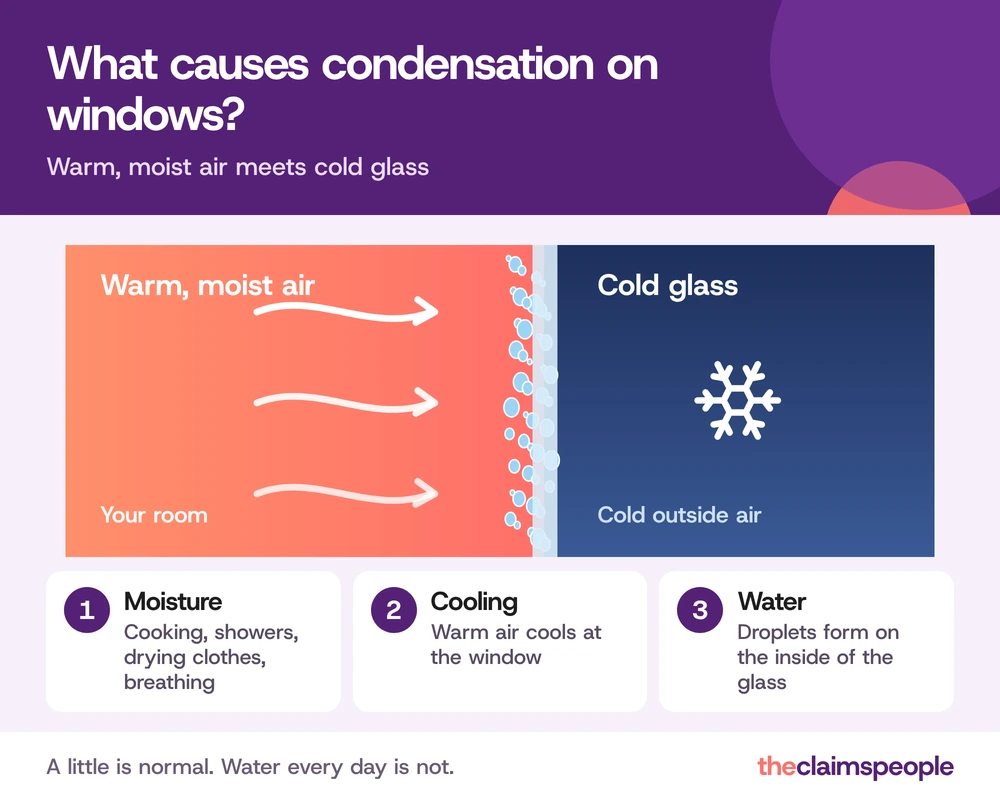
A little on a cold morning is normal, and it does not mean you are doing anything wrong. The government's guidance on damp and mould calls blaming damp and mould on "lifestyle choices" totally unreasonable.
Why is there condensation on the inside of my windows?
The inside of the glass is where warm room air meets the cold from outside. That is why you see it on the inside of your windows rather than the outside on a winter morning.
Why is condensation worse in the morning?
The glass gets colder overnight, while moisture from breathing builds up in the bedroom. If the door is shut and the vents are closed, it has nowhere to go.
How to stop condensation on windows
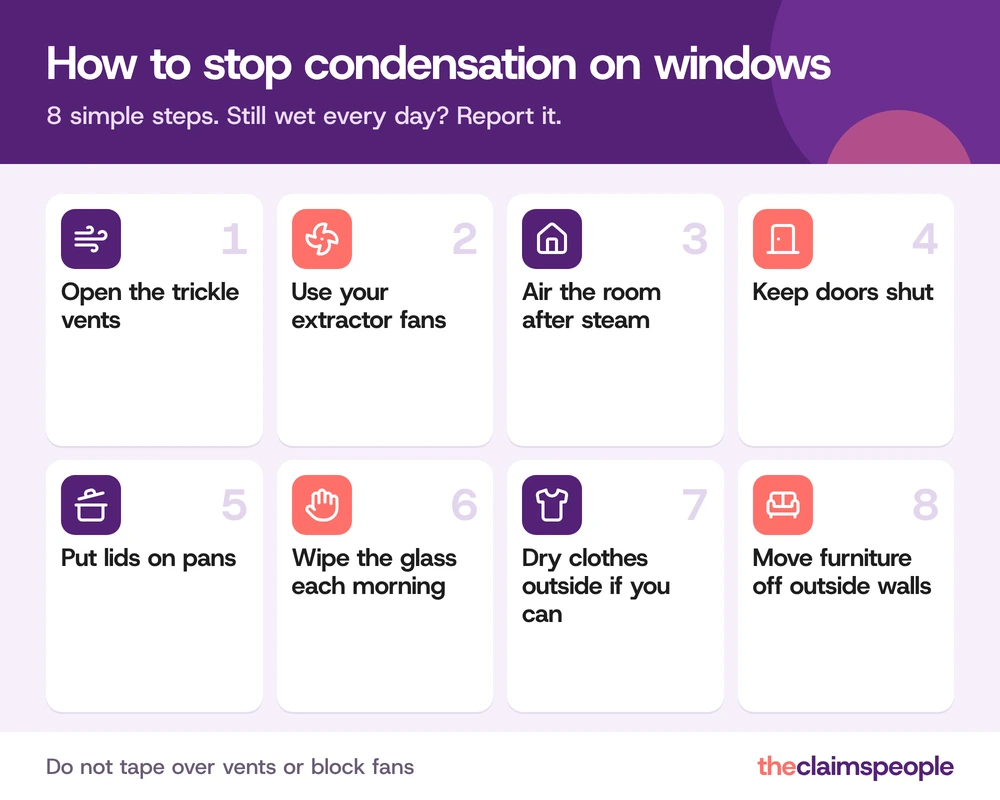
These steps all help, and most cost nothing:
Open the trickle vents. Keep them clear, and open them when you can.
Use your extractor fans. Put them on when you cook or shower and leave them running for a while after. If a fan does not work, report it.
Open a window. A few minutes after a shower or cooking lets the damp air out, if it is safe to do so.
Keep doors shut. Close the kitchen or bathroom door while you cook or shower, so the steam does not spread to colder rooms.
Put lids on pans. Less steam in the air means less water on the glass.
Wipe the glass each morning. Use a cloth or a window vac, then wring it out down the sink.
Dry clothes outside if you can. If you have to dry them indoors, use one room with the door shut and a window open.
Move furniture off outside walls. A small gap lets air move behind it.
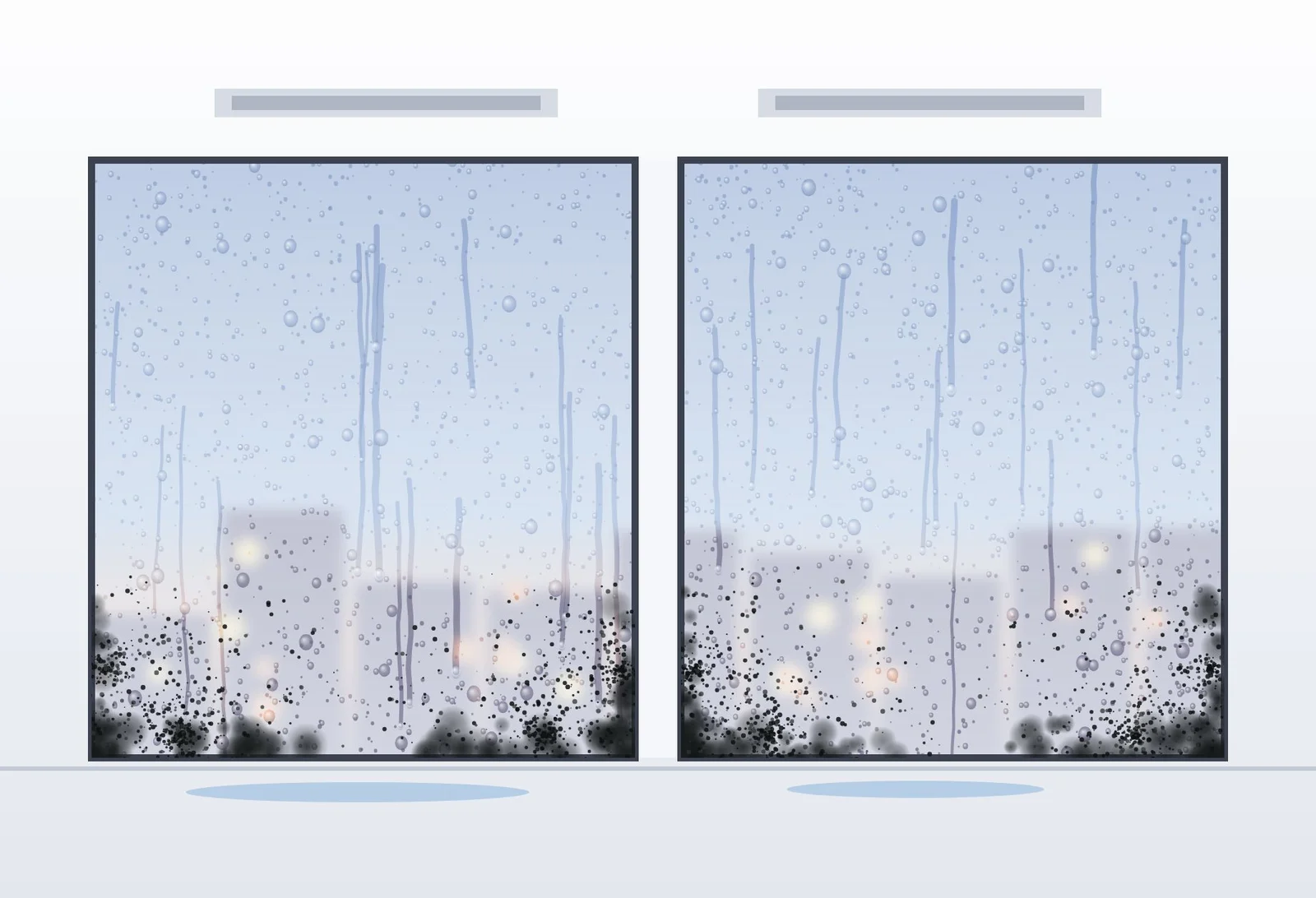
Wipe the window
Clear the steam and see what is underneath.
One warning. Do not tape over vents or block fans to keep the cold out. Blocking a ventilation fan is one of the examples the government gives of something that could take a hazard outside Awaab's Law.
These steps can only go so far. The government's guidance says tenants may be asked to make small, reasonable changes, but that this should not replace fixing the real problem. It also says tenants cannot be expected to reduce moisture if their home does not let them.
What are trickle vents?
Trickle vents are the small slider vents at the top of most uPVC windows. They let a little fresh air in while the window is shut. If yours are stuck, broken or missing, tell your landlord.
How to get rid of condensation in a bedroom
Bedrooms are often the worst room, because two people breathing all night with the door shut adds a lot of moisture. Keep the trickle vents open if you can, do not dry clothes in there, keep wardrobes off outside walls and air the room when you get up.
Do dehumidifiers help with condensation?
They can, because they pull water out of the air. But a dehumidifier treats the symptom and does not fix the cause. In England, if one is needed to keep your home safe while longer term work is arranged, the Awaab's Law guidance for landlords says your landlord should provide it. You should not be expected to buy one.
Condensation on double glazed windows
Condensation on the inside of double glazed windows has the same causes as any other window, so the steps above apply.
Condensation between the two panes is different. You cannot wipe it off, which usually means the seal has failed and the unit is no longer doing its job. Report that as a repair.
Black mould on windows: when to act
Tick anything you have noticed at home.
Check your windows and walls
Take photos before you clean anything. If you are worried about someone's health, speak to your GP or call NHS 111. Our page on damp and mould claims shows more of the signs to look for.
Is condensation your landlord's responsibility?
It can be. It depends on what is causing it.
In England, under Section 11 of the Landlord and Tenant Act 1985, your landlord must keep the structure and outside of your home in repair, along with the heating and other installations. So if a leak, a rotten window, a failed seal or broken heating is behind the condensation, that points to your landlord.
Section 11 is about disrepair, so a landlord may argue that condensation with no fault behind it is not their problem. That is why two other rules matter.
Fitness for human habitation
Your landlord must keep your home fit to live in. Freedom from damp and ventilation are both on the list of things a court looks at. If your home is not reasonably suitable to live in because of damp, your landlord may be responsible even with no repair fault as such.
Awaab's Law
In England, damp and mould that poses a significant risk to your health or safety has fixed deadlines. Your landlord must investigate within 10 working days and make your home safe within 5 working days of the investigation ending. If it is an emergency hazard, for example where damp is affecting a child's asthma, both must happen within 24 hours.
They also have to deal with the cause. The government's guidance says that if a damp and mould hazard comes from missing ventilation or poor insulation, the landlord must take the right action to fix it, such as fitting mechanical ventilation or effective insulation. Wiping the mould away will not stop it coming back.
Read our guides to Awaab's Law and what changes in Phase 2 for the full picture.
What if your landlord blames your lifestyle?
You may have been told to open a window, turn the heating up or stop drying clothes indoors. Advice is fine. Using it as a reason to do nothing is not.
The guidance for landlords says it is unacceptable to assume a hazard comes down to a tenant's lifestyle, and that landlords must not fail to act because of that assumption. It accepts that cooking, bathing, washing and drying laundry all produce moisture, and says these are unlikely to be a breach of your tenancy.
Mould coming back however often you wipe it?
Answer 4 quick questions to see what to do next.
How to report condensation and mould
Take dated photos in daylight. Show the wet sill, any mould and any broken fan or vent.
Report it through your landlord's official route and use the words damp and mould. Say how long it has been happening.
Tell them who lives in your home and whether anyone's health is affected.
Keep a copy of what you sent, with the date and any reference number.
If they look at your photos and say nothing is wrong, ask for someone to inspect in person.
Keep any written summary they send you.
If it gets worse, report it again. A change like this can restart the deadlines.
If nothing happens, use your landlord's complaints process and then go to the Housing Ombudsman in England or the Public Services Ombudsman for Wales in Wales.
Can you claim for condensation damage?
You may be able to, depending on your circumstances. A claim usually comes down to whether you told your landlord about the problem, whether you can show it, whether they had enough time to put it right and whether they failed to do so.
That is why the report matters so much. If you have not reported the problem yet, start there.
A claim can cover getting the work done, compensation for the time you have lived with the problem and belongings that have been damaged. Our guide to damp and mould compensation explains how this works.
Claims like this are normally funded on a no win no fee basis. There is nothing to pay upfront and no fee to us if your claim does not succeed. If it succeeds, deductions apply, and every deduction is set out in writing before you sign anything. Our no win no fee guide explains how it works.
What about Wales?
The Awaab's Law deadlines apply in England. In Wales, Section 11 does not apply to occupation contracts. Instead, the Renting Homes (Wales) Act 2016 requires landlords to keep homes in repair and fit for human habitation, and damp and mould is one of the matters looked at.
Related guides
Frequently asked questions
What causes condensation on windows?
Warm, moist air hitting cold glass. Everyday moisture from cooking, showering, drying clothes and breathing is the usual source, and poor ventilation or insulation makes it worse.
Is condensation on windows normal?
A little on a cold morning is normal. Water that pools on the sill every day, or black mould around the window, is a sign to look into it and report it.
How do I stop condensation on my windows overnight?
Keep trickle vents open if you can, avoid drying clothes in the bedroom and move furniture away from outside walls. Wipe the glass first thing in the morning.
Is condensation my landlord's responsibility?
It can be. If the cause is a repair problem, poor ventilation or poor insulation, your landlord may be responsible. In England, damp and mould that poses a significant risk to health or safety has fixed deadlines under Awaab's Law.
Can my landlord blame me for condensation?
Government guidance says it is unacceptable for landlords to assume a hazard comes down to a tenant's lifestyle. Everyday tasks such as cooking, bathing and drying laundry are unlikely to be a breach of your tenancy.
Does condensation cause mould?
It can. Moisture sitting on cold surfaces gives mould what it needs to grow, which is why water around windows should not be left.
What are trickle vents for?
Trickle vents let a little fresh air into a room while the window is shut, which helps moisture escape.
Still wiping your windows every morning?
If you have reported damp or mould to your council or housing association and nothing has changed, you may be able to pursue repairs and compensation, depending on your circumstances. Free to check, no obligation.
Check if you can claimThis page is general information, not legal advice. Every claim turns on its own facts. Speak to a qualified solicitor about your circumstances. Last checked 5 November 2026.